
"Doctor, filler really hurt when I got it elsewhere. Why doesn't it hurt here?"
It's a question I hear all the time in the treatment room — and one that makes me stand a little taller every time. So today, I'll give a slightly longer answer.
Avoid the nerves to avoid, block the nerves to block — precisely
Facial pain travels along a few major sensory nerves. The forehead and brow are served by the supraorbital nerve, the front cheeks and upper lip by the infraorbital nerve, and the lower lip and chin by the mental nerve. Each emerges onto the face through a specific opening in the bone and then branches out.
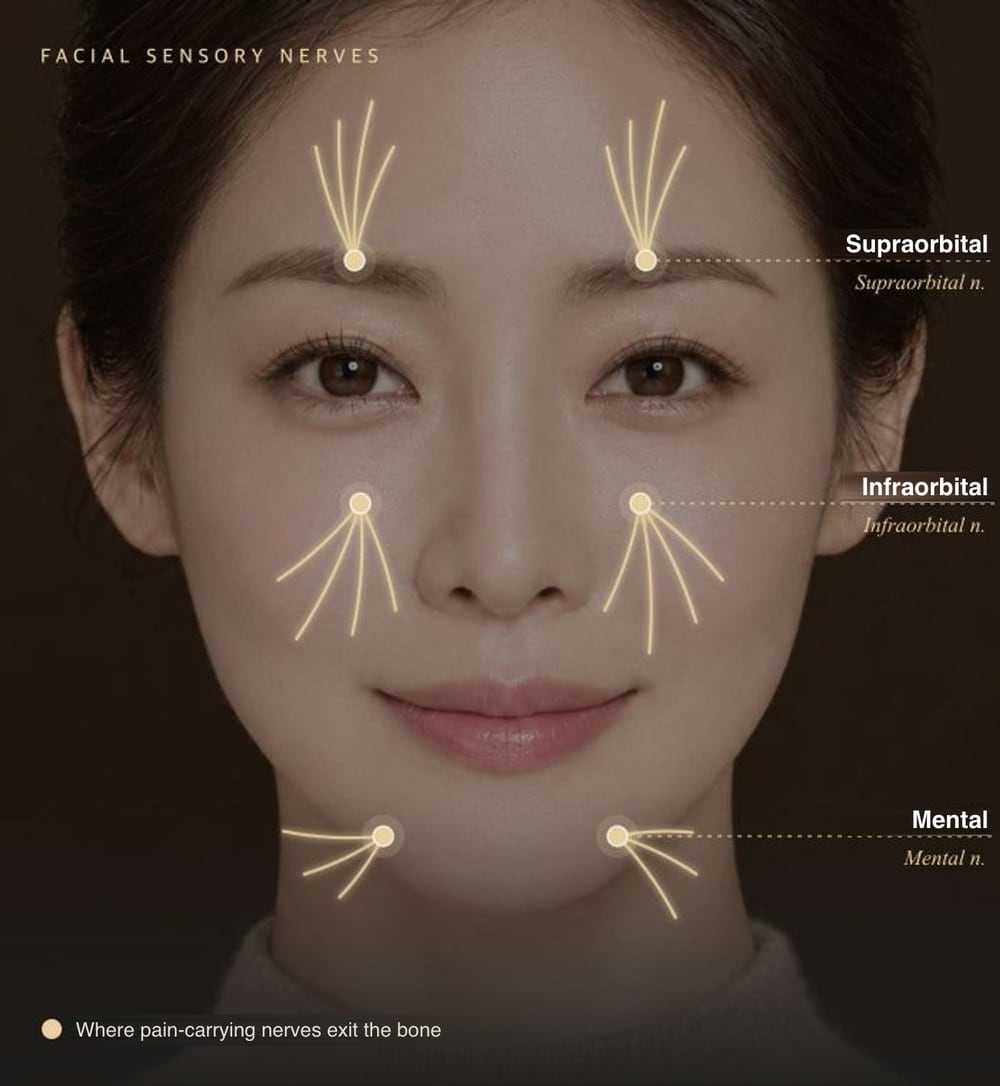
Main sensory nerves that transmit pain, and where they exit the bone
With this map precisely in mind, I can do two things. First, I insert the needle and cannula avoiding the paths of the nerve trunks. Second, where I must pass through, I inject a small amount of anesthetic where the nerve emerges to quiet the entire area that nerve serves in advance. That is why there's no need to apply thick numbing cream and wait.
The less the hand moves, the less the face hurts
Pain comes from 'movement' more than you might think. Repeatedly inserting and withdrawing the needle, or wandering under the skin searching for the right spot, irritates tissue and damages blood vessels.
I finish the design before treatment. Where to enter, at what depth and how much to place are already decided, so my hands have no reason to hesitate. No unnecessary movements, calm and steady without tremor, following only the planned path. Restrained movement looks clean, but above all, the patient's face feels the difference first.
So there is less pain, less bruising and less swelling
Avoid the nerves, block only what's necessary precisely, and disturb the tissue less — natural results follow.
- Pain — Many patients lie comfortably throughout and ask, "Done already?"
- Bruising — By avoiding blood vessels and minimizing movement, bruising is rare.
- Swelling — With minimal tissue trauma, swelling subsides quickly and you can return to your daily routine right away.
…Reading that back, it seems I've done nothing but boast. To be fair, I should also mention the parts that aren't my doing.
In fact, fillers contain an anesthetic too
Most fillers widely used today contain an anesthetic called lidocaine. So patients feel a bit of pressure during the first few injections, but as the treatment progresses and the anesthetic in the filler spreads, the pain gradually decreases. When patients say "It doesn't hurt at all now" toward the end, this ingredient certainly deserves some credit.
Good products let the hands work less
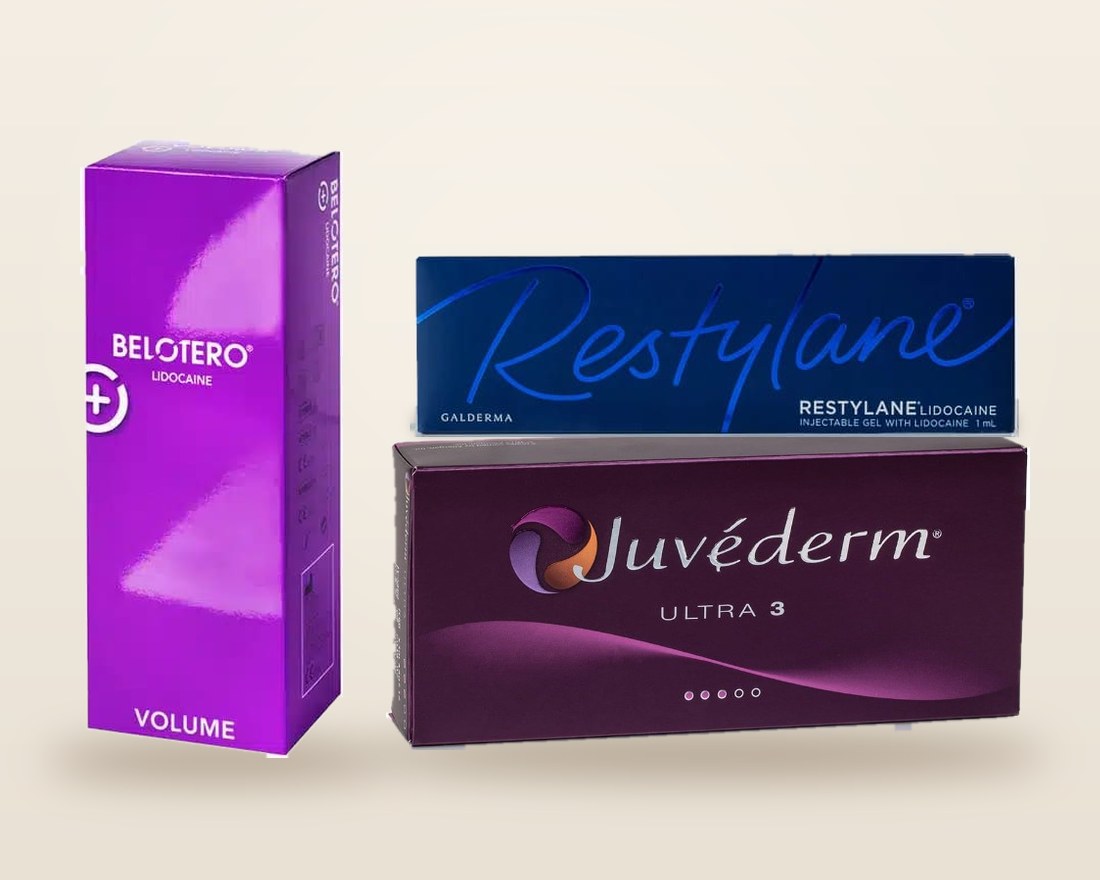
Filler products used at Spade
At Spade we mainly use products such as Juvéderm and Belotero. These products settle softly into the tissue and take shape naturally. That means less need to press, knead and mold under the skin to achieve the desired shape. When the practitioner doesn't have to force things, the patient is that much more comfortable.
So the honest answer to "Why doesn't it hurt here?" is this: it's the combined result of anatomical study, trained hands, and good ingredients in good products. Still, knowing how to use good materials in the best possible way — that, I believe, remains my job.
Comfort is no accident; it comes from prepared hands meeting good materials.